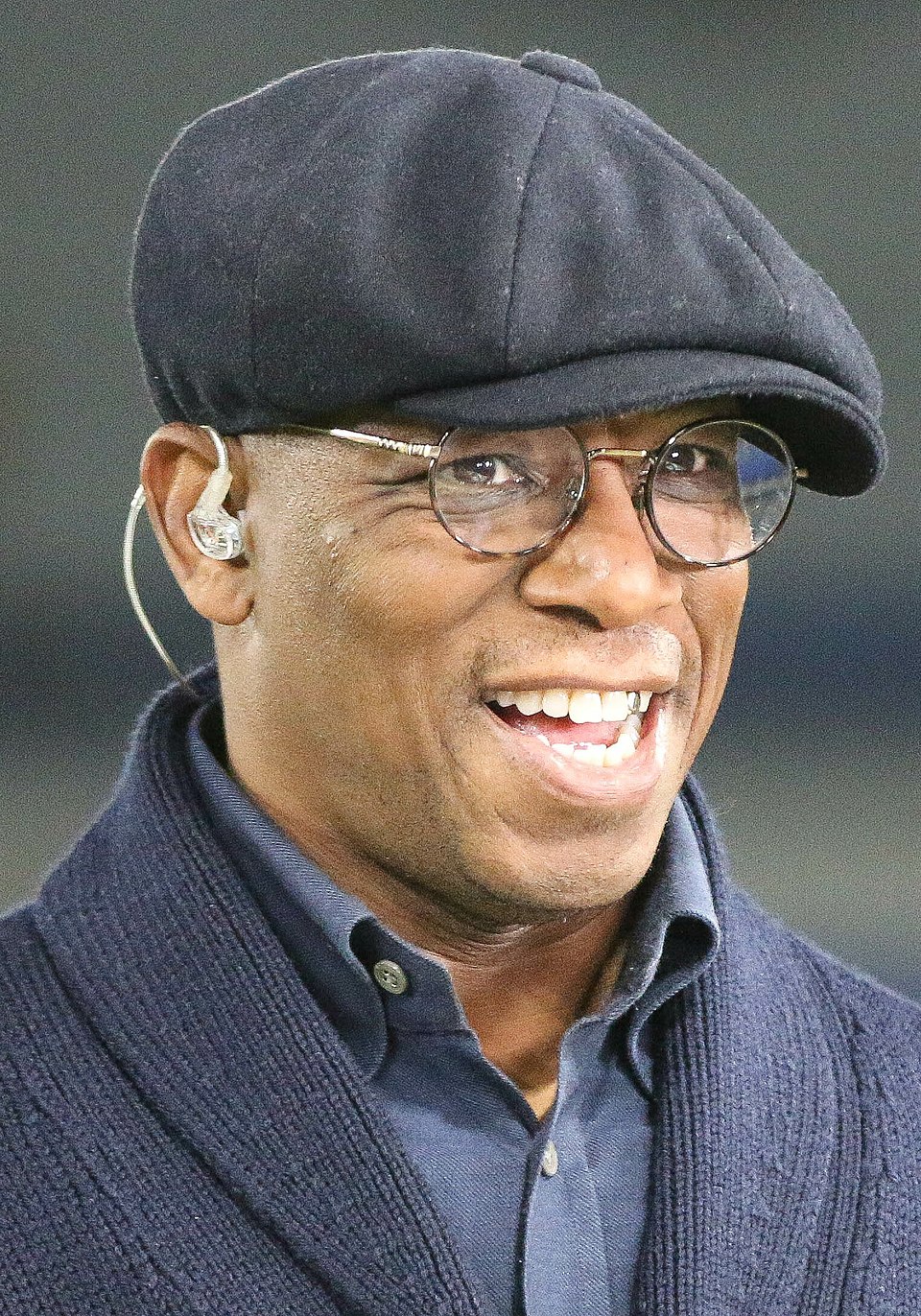
Ian Wright: From Modest Beginnings to Unforgettable Arsenal Icon
In the pantheon of English football legends, few figures shine as brightly or with as much infectious charisma as Ian Wright. Born on November 3, 1963, Wright's journey from a working-class upbringing in South London to becoming one of Arsenal’s most celebrated and prolific strikers is a powerful narrative of raw talent, unwavering determination, and the sheer joy of the beautiful game. His distinctive goal-scoring prowess, relentless work ethic, and vibrant personality left an indelible mark on an entire generation of football fans, cementing his legacy not just as a footballer, but as a true icon of the sport. His story is a testament to the belief that with enough grit and self-belief, even the most challenging beginnings can lead to extraordinary heights.
A Journey Forged in Woolwich: Wright's Early Years
The foundations of Ian Wright's remarkable career were laid in the streets of Woolwich, London, a working-class environment that shaped his character and fueled his ambition. Growing up, Wright faced numerous challenges, including periods of financial hardship, which many would find debilitating. However, for young Ian, football was more than just a pastime; it was an escape, a passion, and a tangible pathway to a brighter future. From a very young age, his natural athletic gifts were undeniable: exceptional speed, blistering agility, and, crucially, an innate, almost magical ability to find the back of the net.
He honed these skills playing for local youth teams, where his goal-scoring exploits quickly made him a standout talent. These formative experiences were instrumental in instilling in him a profound sense of resilience and discipline. Wright learned early on that natural talent, while vital, was merely the starting point. Success at the highest levels demanded ceaseless hard work, unwavering self-belief, and a relentless desire to improve. These were the mental attributes that would define his later career, allowing him to overcome obstacles and consistently perform under immense pressure.
The Professional Ascent: From Non-League Grit to Crystal Palace Stardom
Unlike many professional footballers who are scouted and integrated into elite academies at a tender age, Ian Wright's professional journey began relatively late. After spending valuable years honing his craft in the less glamorous, but equally competitive, world of non-league football with clubs like Greenwich Borough and Dulwich Hamlet, his undeniable talent could no longer be ignored. These stints taught him invaluable lessons in grit, perseverance, and the raw physicality of the game, experiences that fortified his resolve and sharpened his competitive edge.
His breakthrough came in 1985 when, at the age of 21, he signed his first professional contract with Crystal Palace. It was a moment of destiny, and Wright wasted no time in demonstrating his exceptional abilities. He quickly became a fan favourite, not just for his consistent goal-scoring in the Second Division, but for the intelligence of his movement, his impeccably timed runs, and his clinical finishing that often seemed to defy belief. Wright’s impact was immediate and profound, playing a pivotal role in helping Crystal Palace secure promotion to the top tier of English football. During his tenure at Selhurst Park, he developed the robust physical and mental attributes necessary for top-level performance, mastering the art of operating in crowded penalty areas and maintaining composure when it mattered most. His stellar performances earned him individual accolades, including leading scorer and Player of the Year awards, firmly establishing him as one of England’s most exciting emerging talents.
Etching His Name in History: The Arsenal Legacy
The summer of 1991 marked a significant turning point for both Ian Wright and Arsenal Football Club. Wright joined the Gunners for a then-record fee for the club, a testament to his burgeoning reputation. His arrival ushered in an era of unprecedented goal-scoring brilliance at Highbury. Over nine seasons, Wright became the embodiment of Arsenal's attacking prowess, his instinctive finishing, blistering pace, and uncanny ability to read the game making him a nightmare for defenders. He thrived under managers George Graham and later Arsène Wenger, adapting his game while never losing his fundamental goal-scoring instinct.
Wright’s time at Arsenal was nothing short of legendary. He scored a staggering 185 goals for the club, a record that stood proudly until it was eventually surpassed by the equally iconic Thierry Henry. His impact, however, extended far beyond mere numbers. He was a scorer of crucial goals, often turning the tide in tight matches and delivering when the stakes were highest. Wright’s infectious enthusiasm and passionate celebrations endeared him to the Arsenal faithful, making him a symbol of the club's fighting spirit. He collected an FA Cup, a League Cup, and a Premier League title with the Gunners, cementing his place in the club's illustrious history. For a deeper dive into his remarkable contributions, read our article: Arsenal Legend Ian Wright: Goals, Impact, and Legacy.
Beyond the Pitch: A Voice of Insight and Passion
Even after hanging up his boots, Ian Wright's connection to football and his beloved Arsenal remained as strong as ever. He transitioned seamlessly into a highly successful career in football media and community engagement, becoming one of the most respected and recognisable pundits in the UK. His insightful analysis, combined with his characteristic passion and wit, has made him a beloved figure on television and radio. Wright’s ability to articulate the nuances of the game, often drawing on his own vast experience as a top-level striker, provides immense value to viewers and listeners.
His current relevance as a commentator was particularly evident following Arsenal's recent Carabao Cup final defeat to Manchester City. As a former Gunner and an ardent supporter, Wright didn't shy away from offering his candid assessment. He claimed that the 2-0 loss to Manchester City had significantly "turned up" the pressure on Mikel Arteta's side in the Premier League title race. Witnessing the Gunners' quadruple bid fall at the first hurdle at Wembley, with Nico O’Reilly securing a brace amidst a howler from Kepa Arrizabalaga for the first goal, clearly resonated with Wright.
While Arsenal still held a significant nine-point lead in the Premier League at the time of his comments, Wright urged caution, understanding the psychological impact such a high-profile defeat could have. His insights served as a practical reminder that even with a comfortable lead, the mental fortitude required for a title charge is immense, especially when a direct rival has delivered a psychological blow. This kind of nuanced analysis, rooted in deep personal experience, highlights why Ian Wright's Take: Carabao Cup Loss & Arsenal's Title Pressure is so highly valued by fans and fellow pundits alike.
From the challenging streets of Woolwich to the hallowed turf of Highbury and now to the commentary booths, Ian Wright’s journey is a powerful narrative of ambition realised. His life exemplifies that with talent, unwavering hard work, and an unbreakable spirit, one can not only achieve greatness but also inspire millions. He remains an enduring figure in football, a testament to his incredible playing career, his ongoing contributions to the sport, and his authentic, irrepressible personality.